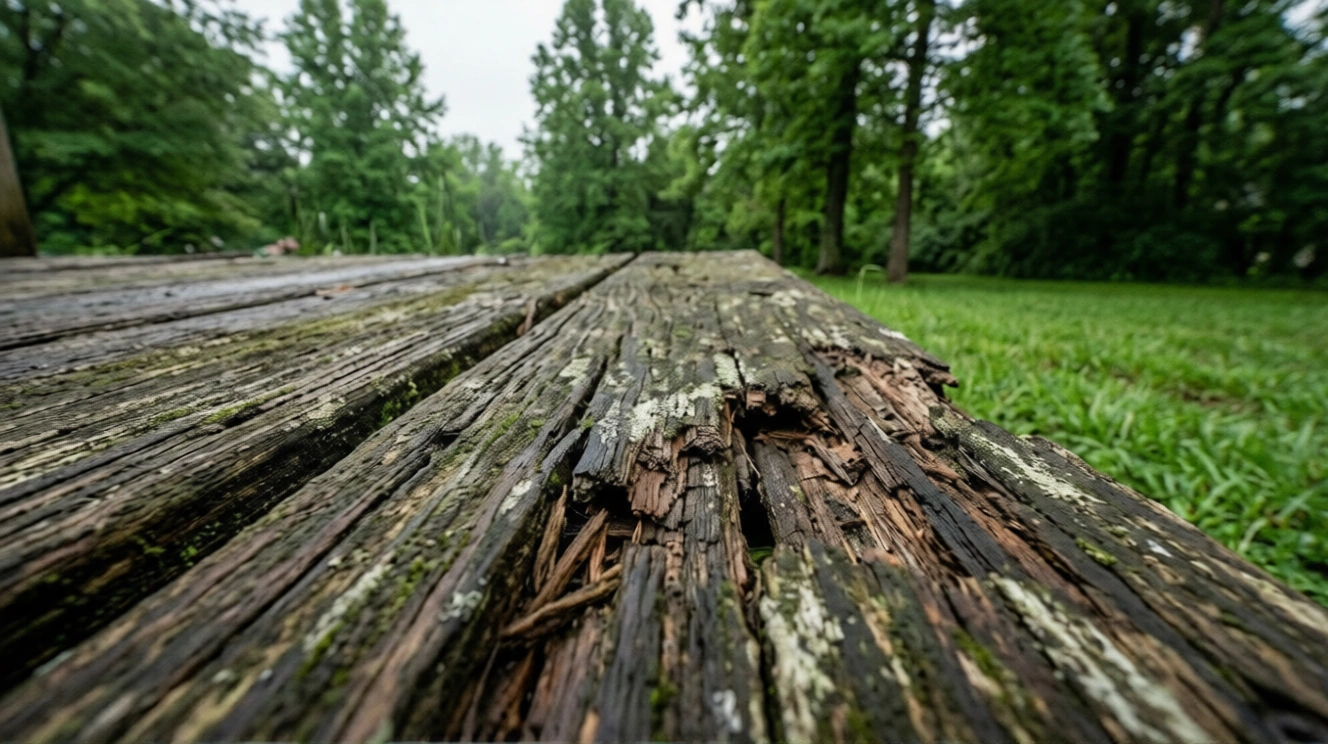
Why Decks Rot Faster in Kentucky
If you’ve noticed soft boards, cracked posts, or dark staining on your deck — Kentucky’s climate may be the reason.
Compared to drier regions, decks in Kentucky experience higher humidity, heavy rainfall, and strong seasonal temperature swings, all of which accelerate wood deterioration.
Understanding why this happens is the first step to preventing expensive structural damage.
1. High Humidity = Constant Moisture Exposure
Kentucky experiences long periods of elevated humidity, especially in spring and summer.
When wood absorbs moisture:
- It expands and contracts repeatedly
- Protective sealants break down faster
- Mold and mildew growth increases
Over time, trapped moisture leads to wood rot, fungal growth, and structural weakening — particularly in untreated or poorly sealed lumber.
2. Frequent Rainfall & Poor Drainage
Kentucky averages significant annual rainfall, and many decks are built without proper water management.
Common problems include:
- Improper board spacing
- No flashing where the deck attaches to the house
- Water pooling between boards
- Soil grading directing water toward posts
Standing water is one of the primary causes of premature deck failure.
3. Freeze-Thaw Cycles in Winter
Winter temperatures in Kentucky fluctuate around freezing.
When moisture seeps into wood and freezes:
- It expands inside the fibers
- Creates micro-cracks
- Weakens structural integrity
Over multiple seasons, this cycle significantly reduces the lifespan of traditional wood decking.
4. Insect Activity & Organic Growth
Warm, humid climates are ideal for:
- Termites
- Carpenter ants
- Fungal spores
If wood remains damp, it becomes a target for pests and decay organisms.
Composite and PVC materials resist these threats far better than traditional lumber.
How to Prevent Deck Rot in Kentucky
✔ Choose the Right Materials
Pressure-treated lumber is the minimum standard, but for long-term durability consider:
- Composite decking
- PVC decking
- Properly sealed hardwood
You can compare material options on our
Decking Services Page
to determine which system works best for Kentucky’s climate.
✔ Improve Ventilation & Drainage
A professionally built deck should include:
- Proper joist spacing
- Adequate airflow underneath
- Correct board spacing (⅛"–¼")
- Flashing tape on ledger boards
- Concrete footings above grade
Moisture management starts during installation — not after damage appears.
If you're unsure whether your current structure was installed correctly, consult a professional
Deck Builder
for a structural inspection.
✔ Seal & Maintain Regularly
For wood decks:
- Re-stain or seal every 2–3 years
- Clean debris between boards
- Inspect fasteners annually
- Check post bases for soil contact
Even “low-maintenance” decks benefit from periodic cleaning to prevent buildup.
Signs Your Deck May Already Have Rot
Watch for:
- Soft or spongy boards
- Dark discoloration
- Cracking near fasteners
- Loose railings
- Musty odor
If structural joists or ledger boards are compromised, replacement may be necessary for safety.
Average Deck Lifespan in Kentucky
| Material | Typical Lifespan in KY Climate |
|---|---|
| Pressure-Treated Wood | 10–15 years |
| Hardwood | 20–30 years |
| Composite | 25–30+ years |
| PVC | 30–40+ years |
Climate plays a major role in these numbers — proper installation can extend them significantly.
Final Thoughts
Deck rot in Kentucky isn’t unusual — but it is preventable.
The key factors are:
- Smart material selection
- Proper drainage design
- Professional installation
- Routine maintenance
Cutting corners during construction often leads to costly repairs within a few years.
A properly designed deck, built for Kentucky’s climate, can last decades with minimal issues.
If you’re planning a new build or concerned about existing damage, investing in climate-appropriate materials and expert craftsmanship makes all the difference.
Tags: #DeckMaintenance #KentuckyDecks #DeckRepair #CompositeDecking #OutdoorLiving