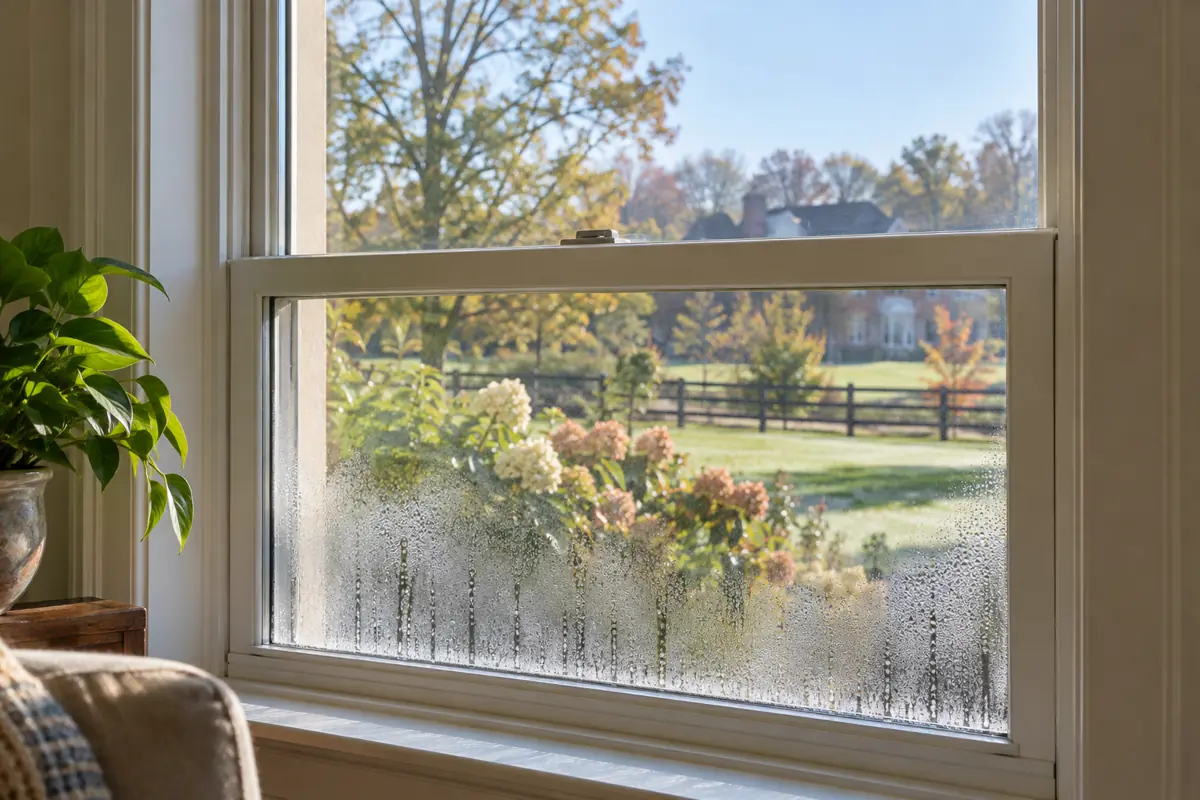
Fog on a window does not always mean the window needs replacement. First determine which surface is wet. Room-side moisture, outdoor dew, and haze trapped between panes point to different causes and different next steps.
Yellowstone Renovation provides window replacement in Lexington and Central Kentucky. This guide is a diagnostic starting point, not a substitute for inspecting a leaking wall or damaged opening.
Moisture on the room side of the glass
Warm indoor air can release moisture when it meets a cold glass surface. You can usually wipe this condensation from inside the room. Cooking, showers, indoor drying, and humidifiers can raise indoor moisture; closed blinds and limited air circulation can keep the glass cooler.
Start by checking indoor humidity, using bathroom and kitchen exhaust fans, and allowing air to circulate near the window. Persistent moisture can damage paint, trim, and adjacent materials, so investigate it rather than repeatedly wiping it away. A better-performing window may change surface temperatures, but it does not remove a household moisture source.
Moisture on the exterior face
Outdoor dew can form on the outside of an efficient window under certain temperature and humidity conditions, often clearing as the day warms. If you can wipe it from outdoors and there is no damage or indoor leak, it is not by itself evidence of a failed glass seal.
Fog trapped between panes
If the haze cannot be wiped from either side and lies inside an insulated glass unit, the unit's seal may have failed. This is a different issue from indoor humidity. Ask about the glass unit's warranty and whether replacing the insulated glass or the complete window makes sense for its age and condition.
Water at the trim or wall calls for a different inspection
Staining below a window, soft trim, peeling finish, or water appearing during wind-driven rain may involve the opening's flashing, cladding, or another leak path. The location of condensation on glass will not diagnose that wall leak. Our guide to siding and flashing around openings explains the questions to ask about the surrounding assembly.
If replacement is warranted, compare full-frame versus insert methods before signing a proposal. The Central Kentucky service-area directory and Project Showcase show the company's local exterior scope. The article image is an illustration.
What to photograph before an estimate
- The entire window and nearby wall, plus a close-up of the moisture
- Which side can be wiped and when the fog appears
- Staining, soft trim, or peeling paint around the opening
- The window's label or product information if available
- Whether the issue appears after rain or on clear cold mornings
Frequently asked questions
Does condensation between panes disappear if I lower indoor humidity?
No. Moisture sealed between panes is separate from room air; a failed insulated-glass unit should be evaluated on its own.
Should I replace every window if one is foggy?
Not automatically. Inspect the affected unit, the other windows' condition, warranty coverage, and the home's broader project goals first.
Get the right diagnosis
Request a window estimate with photos and a description of where the moisture forms. Yellowstone Renovation can discuss product and installation options if replacement is the appropriate next step.