If a window leaks water, will not lock, has damaged framing or has insulated-glass failure, it deserves attention before winter. A mild draft or worn weatherstripping may need a smaller repair first. The useful question is not simply whether a window is old; it is whether the complete unit still controls water, air and operation safely.
For Lexington-area homeowners, early fall is a practical time to inspect windows because cooler mornings make drafts and condensation easier to notice while there is still time to measure openings, choose products and plan installation. Replacement can still be performed during cold weather, but an orderly project is easier when decisions are made before the first hard freeze.
Replace before winter when the problem affects safety or the opening
Some symptoms are more urgent than others. Move the window toward the top of the project list when you find any of the following.
The sash will not lock or stay open safely
A window that cannot lock is a security problem. A sash that drops after being raised can also injure someone. Hardware may sometimes be repairable, but cracked frames, distorted sashes or failed balance systems can make replacement the better long-term scope. Test every bedroom window as well as the units used for normal ventilation.
Water reaches the sill, wall or trim
Do not assume that a bead of caulk will solve a leak. Water can enter at the window, at the siding or trim above it, or through a poorly managed rough opening. Staining, soft wood, peeling interior paint, swelling trim or recurring dampness after wind-driven rain calls for investigation before winter freeze-thaw cycles make the damage harder to ignore.
If the surrounding siding is also being replaced, review our guide to siding and flashing around windows and doors. Coordinating those scopes can provide better access to the water-resistive barrier and opening.
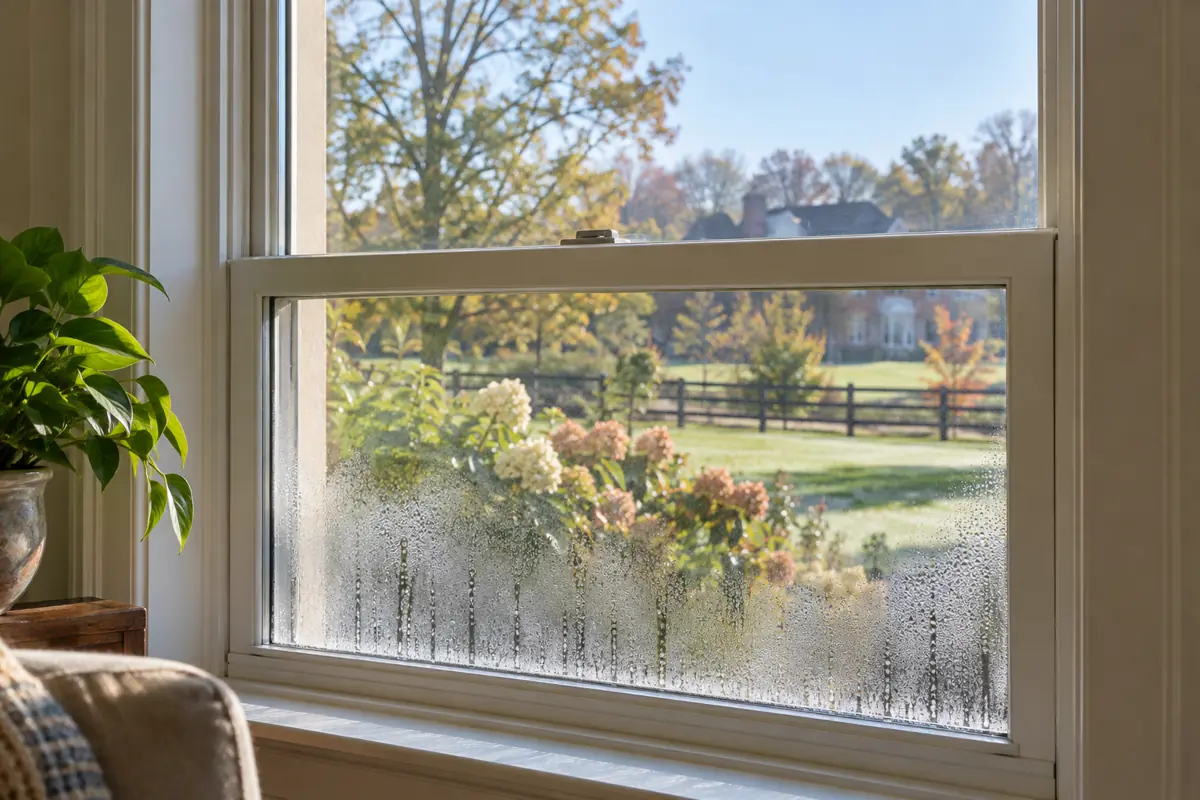
Glass is fogged between the panes
Moisture trapped inside an insulated-glass unit usually indicates a failed seal. It is different from room-side condensation that can form when indoor humidity meets cold glass. The glass unit may be replaceable in some frames; in other cases, age, frame condition and product availability make complete replacement more practical.
Use our window condensation guide to identify whether moisture is inside, outside or between the panes before assuming the whole window has failed.
The frame is soft, cracked or distorted
Rot, movement at the sill, separated corners or a frame that no longer holds the sash square are not weatherstripping problems. The opening should be inspected to determine how far the damage extends. A full-frame replacement can expose the rough opening and allow damaged components and flashing details to be addressed; an insert unit leaves more of the existing frame in place.
Our full-frame versus insert window guide explains that decision in detail.
Problems that may need diagnosis before replacement
Cold weather can reveal a symptom without proving that the window itself is the only cause. A careful estimate separates glass, frame, installation and whole-house conditions.
A draft near the window
First locate the air path. Air may pass through worn weatherstripping, an unlocked sash, gaps between the frame and rough opening, or trim joints. A moving curtain is useful evidence, but it does not identify the exact leak. Lock the window fully, inspect the seals and compare the center of the glass with the perimeter. Replacement may help, but targeted air sealing or hardware work may solve a limited defect.
The U.S. Department of Energy notes that lower window air leakage can improve comfort by reducing drafts. When comparing products, look for the tested rating of the exact unit rather than a broad claim that every model in a brand is efficient.
Condensation on the room side
Interior condensation can reflect high indoor humidity, low glass temperature or restricted air circulation. Check bathroom and kitchen exhaust, humidifier settings, blinds and furniture placement. Persistent moisture still matters because it can damage finishes, but changing the window without managing humidity may not eliminate it.
One uncomfortable room
A cold room can involve the window, but insulation, duct balance, air leakage elsewhere and room orientation also affect comfort. Compare multiple windows on the same side of the home. If only one unit shows staining, fogging, damage or a strong perimeter draft, the evidence points more directly to that opening.
What to inspect during a fall window walk-through
Choose a cool morning and inspect the windows from inside and outside where safely accessible.
- Operate and lock every unit. Note sticking, dropped sashes, broken cranks and loose locks.
- Check the glass. Record cracks, failed seals and where condensation appears.
- Inspect interior trim and sills. Look for swelling, staining, soft spots and peeling finishes.
- Look at exterior trim and siding transitions. Gaps, failed joints and missing head details deserve closer review.
- Feel around the perimeter. Compare suspected drafts with other windows under similar wind conditions.
- Photograph each problem. Include a full-window view and close-ups so the estimate can distinguish units.
- Count window types and access conditions. Upper-story openings, landscaping and interior obstructions affect planning.
Do not remove exterior trim or probe concealed areas if doing so could create a leak. The goal is to document symptoms for a qualified inspection, not open the wall before a repair plan exists.
Choose the installation method before choosing finishes
The first product question should not be color or grille pattern. Determine whether the existing frame can remain.
An insert replacement keeps much of the existing frame and places a new unit within it. It may reduce disturbance when the frame, sill and opening are sound, but it also reduces the glass area and leaves concealed conditions in place.
A full-frame replacement removes the old window to the rough opening. It creates access for inspecting the sill, surrounding materials, insulation and water-management details. It is usually the more appropriate conversation when there is rot, leakage, frame distortion or a planned change in window style.
The proposal should state the method clearly. “Replacement window” by itself does not describe how much of the existing assembly will be removed.
Compare performance labels, not marketing adjectives
For a Kentucky home, request the NFRC label or certified ratings for the exact window configuration. The National Fenestration Rating Council explains the main values:
- U-factor measures heat transfer through the unit; lower values indicate better resistance to heat loss.
- Solar heat gain coefficient describes how much solar heat enters through the window.
- Air leakage reports tested air movement through the product.
- Visible transmittance indicates how much daylight passes through.
- Condensation resistance compares the product's ability to resist condensation under test conditions.
ENERGY STAR also recommends selecting a product certified for the applicable climate zone and checking the ENERGY STAR label beside the NFRC label. Use the ENERGY STAR climate-zone finder for the project's county rather than assuming one glass package fits every location.
Can windows be replaced during winter?
Yes, when site conditions and manufacturer requirements allow it. A crew can work opening by opening, prepare the new unit before removal and temporarily isolate the work area. Severe weather, wet openings, sealant temperature limits and unsafe exterior conditions can require rescheduling.
Planning before winter still has advantages. It allows time to diagnose leaks, compare full-frame and insert scopes, confirm lead times and order the correct configuration. It also reduces pressure to accept a poorly defined proposal simply because the first cold week has arrived.
What a useful Lexington window estimate should include
Ask for a written scope that identifies:
- each window by room, size and operating style;
- insert or full-frame installation for each opening;
- the manufacturer, series, frame material and glass package;
- NFRC performance ratings for the quoted configuration;
- interior and exterior trim work;
- insulation, flashing, sealants and sill treatment;
- disposal of the existing units;
- repair allowances or exclusions for concealed rot;
- product and workmanship warranties; and
- the expected sequence and protection of occupied rooms.
A complete scope makes two proposals easier to compare and helps prevent an insert price from being mistaken for a full-frame project.
Yellowstone Renovation provides window replacement services in Lexington and surrounding Central Kentucky communities. Review the service-area directory, the Nicholasville service-area page and the Project Showcase for additional local context.
Frequently asked questions
Should every old window be replaced at once?
Not automatically. Prioritize units with water intrusion, unsafe operation, failed locks, damaged frames or failed insulated glass. A measured inspection may support replacing one elevation or room group first while sound units remain in service.
Does a draft always mean the window needs replacement?
No. Worn weatherstripping, an unlocked sash, perimeter gaps or nearby wall leakage can produce a draft. Find the air path before choosing the repair.
Is condensation between panes repairable?
The insulated-glass unit may be replaceable if the frame and sash are sound and compatible parts remain available. When the window also has frame damage, poor operation or multiple failures, complete replacement may be more practical.
Is full-frame replacement better before winter?
It is better when the existing frame, sill or opening needs correction. If those components are dry, square and sound, an insert may be appropriate. The season does not replace the need for a condition-based decision.
Plan the work before colder weather arrives
Document the symptoms, decide whether each opening needs repair, insert replacement or full-frame replacement, and compare exact product ratings. Request a window estimate from Yellowstone Renovation to have the openings measured and the installation scope explained before ordering.