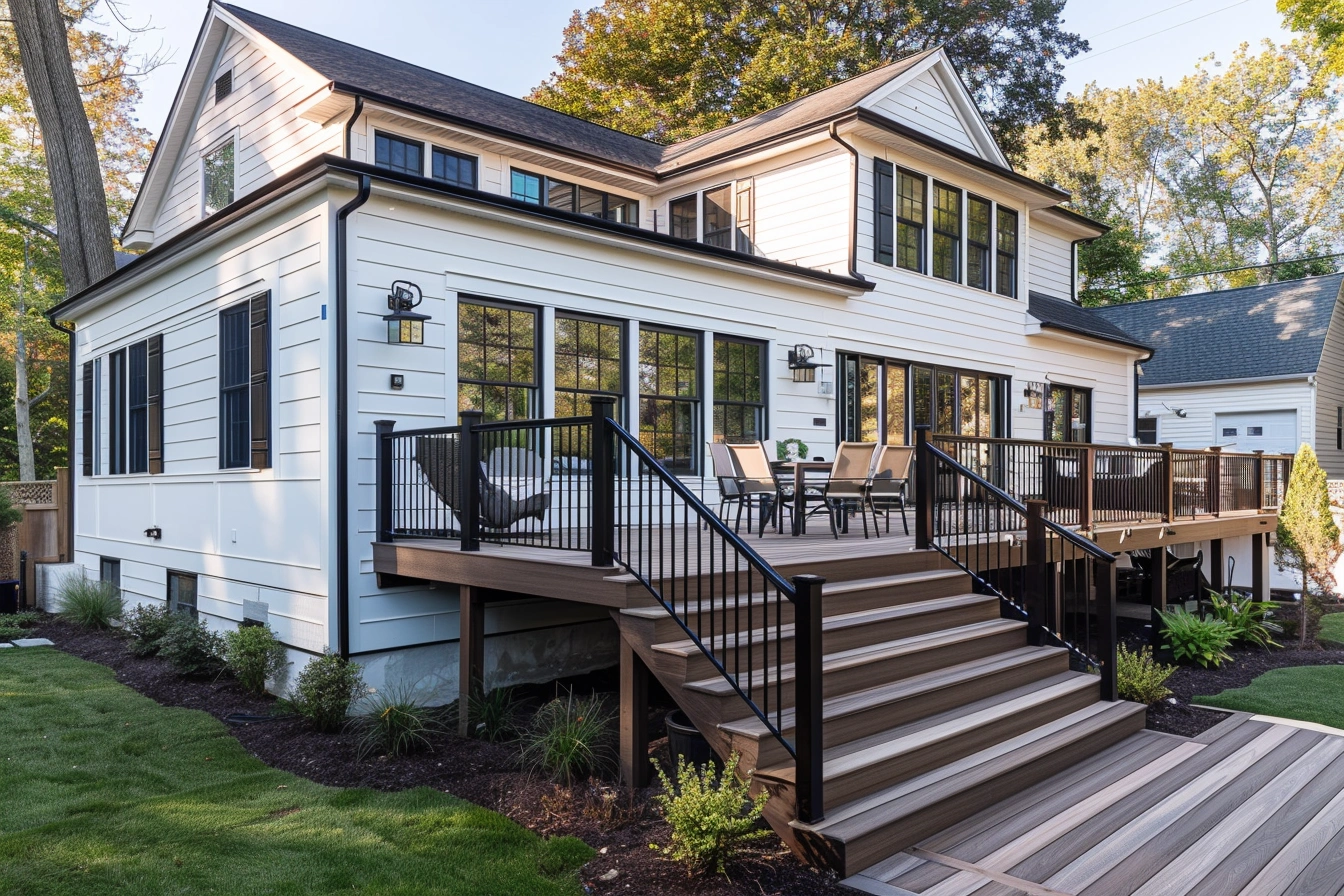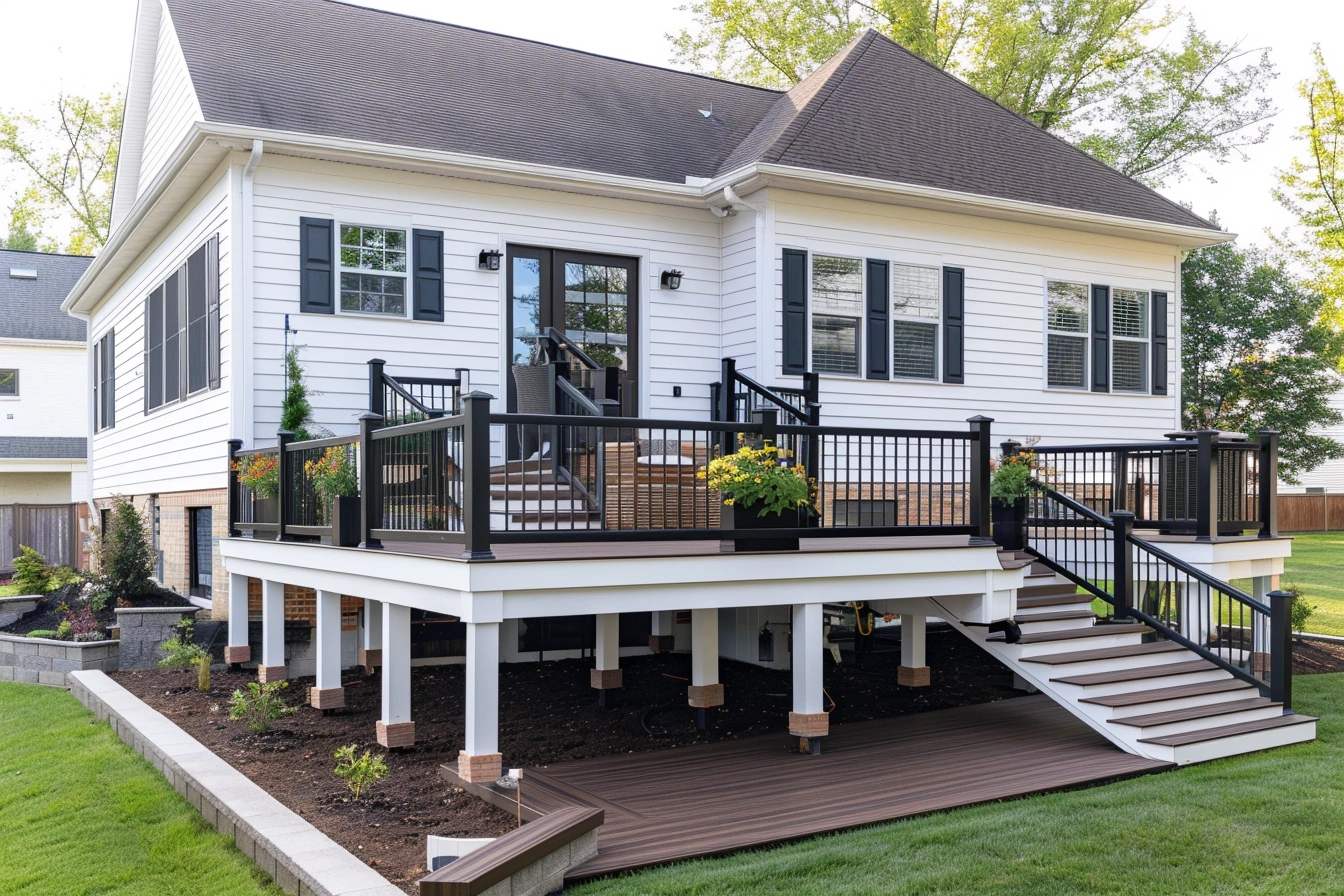
Fall exterior maintenance in Central Kentucky should start with water: clear leaves from drainage paths, confirm downspouts discharge away from the house, and look for staining or soft materials around siding, windows, doors and deck connections. Next, check the parts people use—stairs, railings, gates and entry doors—then document anything that moves, leaks or no longer closes correctly. If you find an unstable railing, active electrical hazard, significant structural movement or a leak entering the house, restrict access and call the appropriate qualified professional.
This checklist is designed for a careful walk-around from the ground and from safely accessible interior spaces. It is not a roof inspection, structural certification or substitute for a licensed trade where one is required.
Published October 2, 2026 by Yellowstone Renovation. The cover image is an original illustration, not a Yellowstone project photograph.
The 45-minute fall exterior checklist
Choose daylight after a dry spell, bring a phone or camera, and walk the same direction around the house so you do not miss an elevation. Photograph each concern twice: one wide view that shows its location and one close view that shows the condition.
| Area | What to check before winter | Call sooner when you see |
|---|---|---|
| Gutters and drainage | Leaves, overflow marks, loose downspouts, discharge near the foundation | Active overflow, erosion, water entering the house |
| Siding and trim | Open joints, impact damage, loose panels, soft trim, peeling finishes | Bulging cladding, repeated wet spots, visible decay |
| Deck or porch | Railings, steps, surface, framing visible from grade, drainage | Movement, sagging, soft structural wood |
| Fence and gates | Leaning sections, loose posts, dragging gates, damaged hardware | A section that could fall or a gate that will not secure |
| Windows and doors | Operation, locks, glass, weatherstripping, stains, exterior transitions | Water entry, failed locks, cracked glass, soft frames |
| Walks and exterior lighting | Trip points, loose handrails, blocked fixtures, damaged covers | Exposed wiring, severe settlement, unstable rails |
Do not climb onto the roof, lean a ladder against damaged materials or probe a wall in a way that opens the weather barrier. A roofing concern should go to a qualified roofing professional; Yellowstone Renovation does not present this checklist as a roofing service.
1. Keep leaves and water moving away from the house
Look up from the ground for leaves at gutter outlets, dark overflow streaks and disconnected downspouts. Then look down: water should not discharge against siding, deck posts or the foundation. Low spots, eroded mulch and soil splash on the wall help show where water travels during rain.
Lexington specifically warns residents not to rake leaves into the street because they can clog storm drains and contribute to flooding and water-quality problems. Use the city's current leaf-disposal guidance for collection and disposal options, and keep nearby drains clear without placing yourself in traffic.
Gutter work is often ladder work. If you cannot reach it safely, hire a service equipped for the height. From the ground, you can still record overflow evidence and confirm where each downspout ends.
2. Read the siding, trim and penetrations as one system
Walk each wall and compare similar details. Look for siding that is loose, cracked or bowed; trim that is soft or separating; failed paint that exposes bare wood; and openings around pipes, vents or fixtures. Pay close attention below roof-to-wall intersections and beneath windows, where staining may reveal a water path above the visible damage.
Do not assume every gap should be filled with caulk. Some siding joints and drainage openings are intentionally detailed to release water. A useful repair starts by identifying the material and the intended water path. Our guide to siding and flashing around windows and doors explains why surface sealant alone may not correct a hidden flashing problem.
If several elevations show widespread damage or repeated moisture issues, review Yellowstone Renovation's siding replacement services rather than pricing isolated cosmetic patches without diagnosing the cause.
3. Check the deck, porch and exterior stairs for movement
Clear wet leaves from walking surfaces and stair landings. During normal use, note loose railings, shifting stair treads, raised fasteners, soft boards and slippery growth. From grade, look beneath an accessible deck for sagging, damaged connectors, soft post bases or soil and mulch piled against wood.
A clean surface is not proof that the framing is sound. Composite decking also needs its railings, connections and supporting structure checked. Use the more detailed fall deck inspection checklist for Lexington homeowners if your walk-around identifies a deck concern.
When repair is no longer practical, Yellowstone Renovation's decking services cover design and replacement, and the Lexington deck builder page explains the local planning process. Browse the Project Showcase to see completed exterior work without treating any example as a diagnosis for your house.
4. Inspect fences and gates before wet soil and winter wind
Open and latch every gate. A gate that drags may indicate loose hinges, a shifted post or changing grade; simply trimming the gate can hide the reason it moved. Sight along fence lines for leaning sections, damaged pickets, rusting hardware and vegetation holding moisture against the material.
For wood fencing, focus on posts at grade, fasteners and areas shaded by dense planting. For vinyl, look for cracked or displaced components. For aluminum, check loose sections and damaged coatings. If replacement is being considered, our comparison of wood, vinyl and aluminum fencing in Central Kentucky separates privacy, maintenance and site-condition tradeoffs.
5. Test every exterior window and door you can safely reach
Operate and lock the windows and doors used most often. Look for cracked glass, fogging between panes, worn weatherstripping, daylight at a closed door, loose thresholds and water staining on interior trim. After rain, note exactly where moisture appears rather than covering it before the source is understood.
The U.S. Department of Energy recommends locating air leaks before deciding how to seal them and identifies weatherstripping and caulk as different tools for movable joints and fixed gaps. Its Energy Saver guidance is a useful starting point. Do not seal a drainage opening or apply caulk over wet, deteriorated material.
If a unit leaks, will not lock or has a soft or distorted frame, use our guide on when to replace windows before winter in Kentucky to distinguish urgent replacement signs from issues that may need targeted diagnosis. Yellowstone Renovation provides window replacement and exterior-door estimates through its project consultation form.
6. Finish with the route people use after dark
Walk from the driveway to each entry. Clear leaves from steps, confirm handrails feel secure during ordinary use, and note cracked or settled walking surfaces. Test exterior lights from indoors and look for broken fixture covers from the ground. Do not touch exposed wiring or open an exterior electrical box; those conditions belong with a qualified electrician.
Turn the walk-around into a repair plan
Sort your photos into three groups:
- Safety or active water entry: unstable guards or stairs, failed locks, broken glass, electrical hazards, and water entering occupied space.
- Conditions likely to worsen: loose cladding, soft trim, failed finishes, dragging gates, deteriorated seals and drainage that keeps materials wet.
- Routine upkeep: leaf removal, cleaning, lubrication and minor adjustments after the cause has been confirmed.
Get the first group evaluated promptly. For the second group, request scopes that name the damaged assembly and the repair method rather than accepting a one-line “seal exterior” allowance. Grouping related work can be efficient—for example, coordinating window flashing with siding work—but only when the proposal explains what will be removed and rebuilt.
Yellowstone Renovation serves Lexington and surrounding Central Kentucky communities; see the service-area directory and Nicholasville service page for local coverage.
Fall exterior maintenance FAQs
What should I check first during fall exterior maintenance?
Start with drainage and active leaks, then check safety items such as stairs, railings, gates, locks and walking surfaces. Cosmetic work can wait until water paths and movement are understood.
Should I caulk every exterior gap before winter?
No. Use sealant only where the assembly calls for it. Some gaps allow drainage or movement, and caulk cannot repair decay, failed flashing or a loose component.
Can I inspect my roof from the ground?
You can document obvious missing materials, debris or displaced components from a safe location, but a ground view is limited. Do not climb onto the roof for this checklist; ask a qualified roofing professional to evaluate concerns.
Need help prioritizing an exterior project?
If your walk-around found problems involving decks, siding, windows, exterior doors, fencing or exterior finishes, send wide and close photos with a short note about when the symptom appears. Request an exterior renovation estimate from Yellowstone Renovation. We will define the relevant scope for the services we provide and tell you when a separate specialist should evaluate work outside that scope.